Adding procedures, welcoming another surgeon, or opening another location creates opportunities to serve more patients. It also changes what your practice needs to manage. Policies, staffing, patient records, emergency plans, and facility readiness all deserve attention before growth becomes part of daily operations.
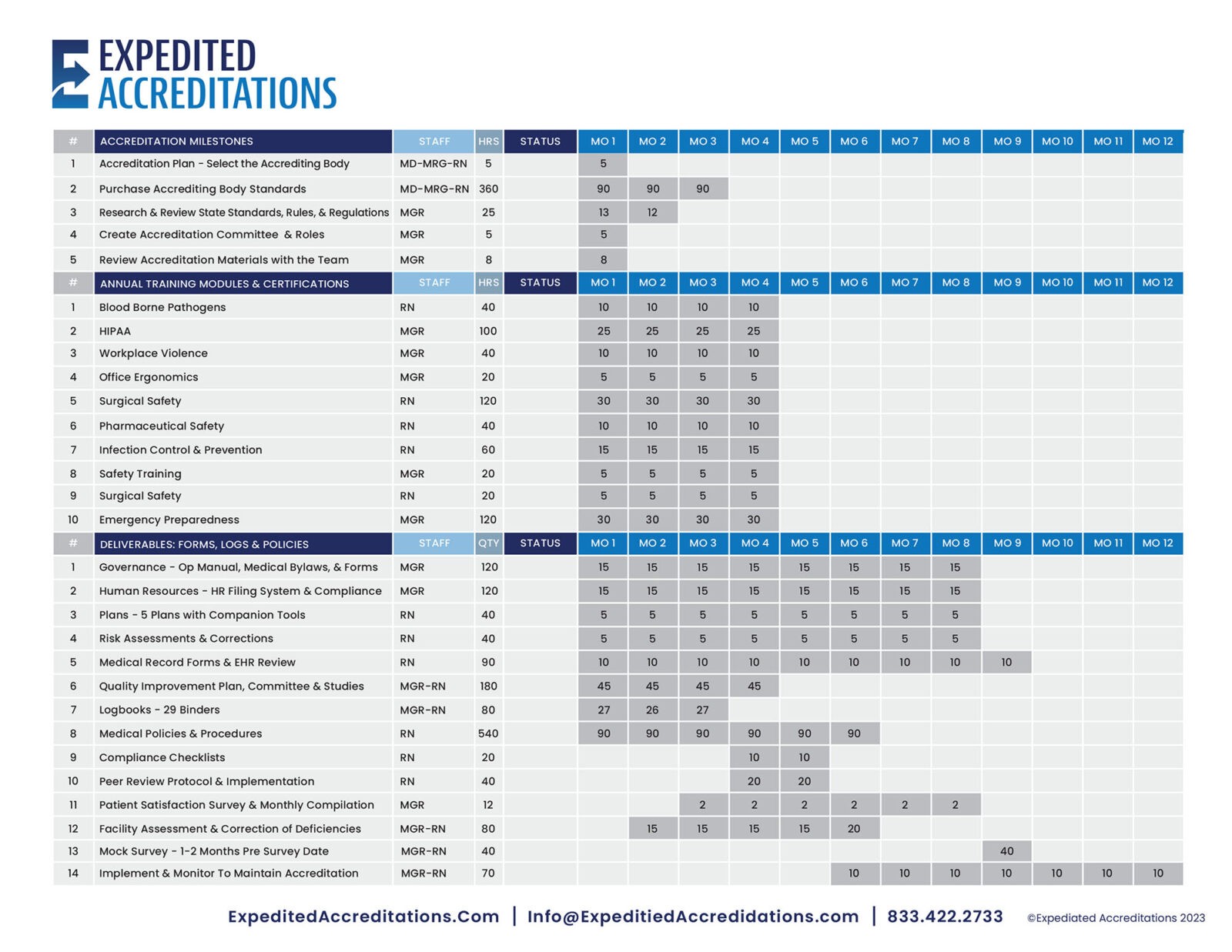
At Expedited Accreditations (EA), we help healthcare organizations build practical systems that support patient safety, staff accountability, and ongoing compliance. For growing plastic surgery practices, that means connecting written expectations with the work your team provides every day.
Keep Policies Aligned with Your Services
Policies and procedures should reflect the care you provide, the people providing it, and the setting in which it takes place. Review them when introducing a procedure, changing anesthesia, adding equipment, or expanding to another location. Address patient selection, infection prevention, medication management, equipment maintenance, and emergency response as applicable to your practice.
A policy becomes useful when staff understand how to follow it. Assign responsibility for approval, implementation, staff education, and review. Templates can provide a starting point, but they need customization to your actual workflows and applicable requirements.
Organized Staff Qualifications and Practitioner Oversight
Maintain current personnel records with licenses, certifications, orientation, training, and competency documentation relevant to each role. Clear job descriptions and reporting relationships help staff understand their responsibilities as the team grows.
Keep practitioner credentialing and privileging organized as well. Credentialing verifies qualifications; privileging defines the specific clinical services a practitioner is authorized to perform within the facility. Use a process appropriate to your setting and applicable requirements, and review whether new services require updated privileges, training, or competency validation.
Make Patient Documentation Consistent
Create clear expectations for documenting the patient journey, from the initial evaluation and informed consent through procedure, recovery, discharge, and follow-up. Define who documents each step, when entries are due, and how records are authenticated and corrected.
Regular record reviews can help identify missing signatures, incomplete assessments, and gaps in follow-up documentation. Use findings to improve workflows and staff education.
Protect patient information through appropriate access controls, secure communication, and staff training. Follow applicable privacy and security requirements, including HIPPA when your practice is a covered entity. Include clinical photography and the separate authorization needed for marketing use when applicable.
Prepare Your Team for Emergencies
Your emergency plan should match your procedures, anesthesia services, patient population, and facility resources. Staff should know their assigned roles, how to activate emergency assistance, and how to coordinate transfer to a higher level of care when needed.
Keep emergency supplies and equipment ready for use and use role-appropriate training and drills to practice the response. Document findings and corrective actions. Revisit the plan when services, staffing, equipment, or facility operations change.
Use Quality Improvement to Guide Growth
A growing practice needs a reliable way to identify problems and confirm that improvements work. Track meaningful measures such as documentation completeness, infections, unplanned transfers, patient complaints, and follow-up concerns. Select measures that fit your services and review results with the appropriate clinical and administrative leaders.
Assign responsibility for corrective actions and review the results after changes are made. A compliance calendar can help organize policy reviews, credential reviews, equipment maintenance, drills, and staff education.
Build Your Next Stage of Growth with EA
Before expanding, review the licensing, facility, anesthesia, and accreditation requirements that apply to your state, services, and practice setting. Addressing these questions early helps your team plan the work and resources needed.
EA provides customized accreditation preparation and ongoing compliance support for plastic surgery practices, office-based surgery centers, and ambulatory surgical centers. Our services include policy development, GAP Analysis, Mock Surveys, staff education through EA Academy, New Practice Start Up and Launch Support, and Annual Compliance Maintenance Plans.
Schedule a complimentary consultation to discuss your next stage of growth and the support your organization needs.
expeditedaccreditations.com | 971.429.6379